The Yury Popka Belarusian Museum
The Yury Popka Belarusian Museum
An exhibition at the Ivan Lutskevich Vilnius Belarusian Museum
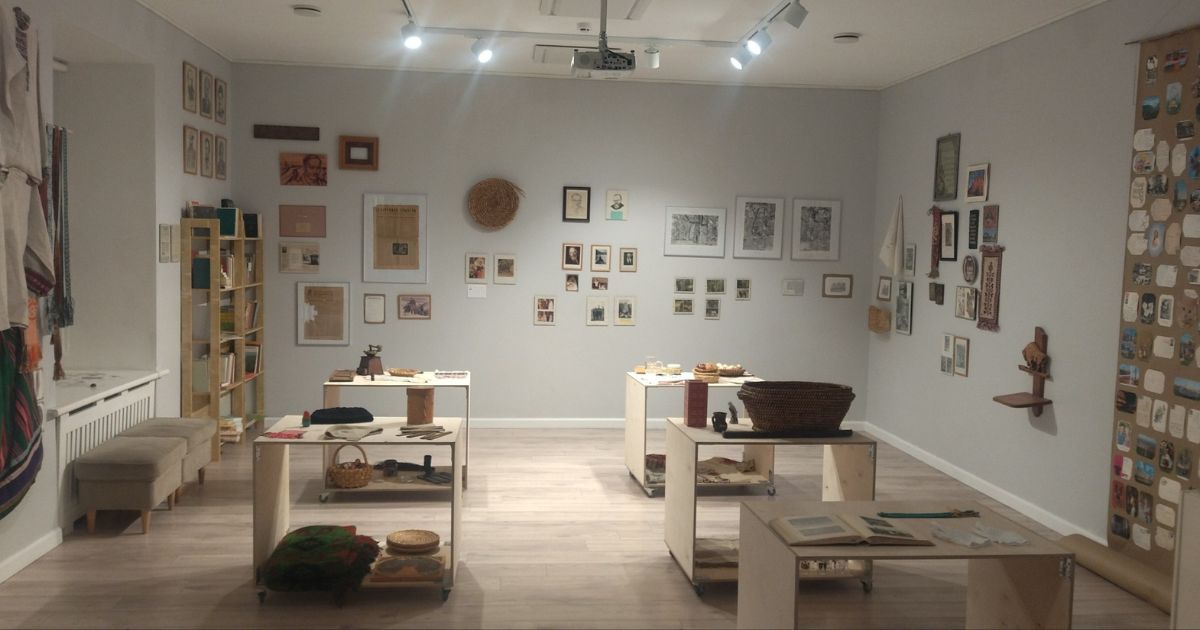
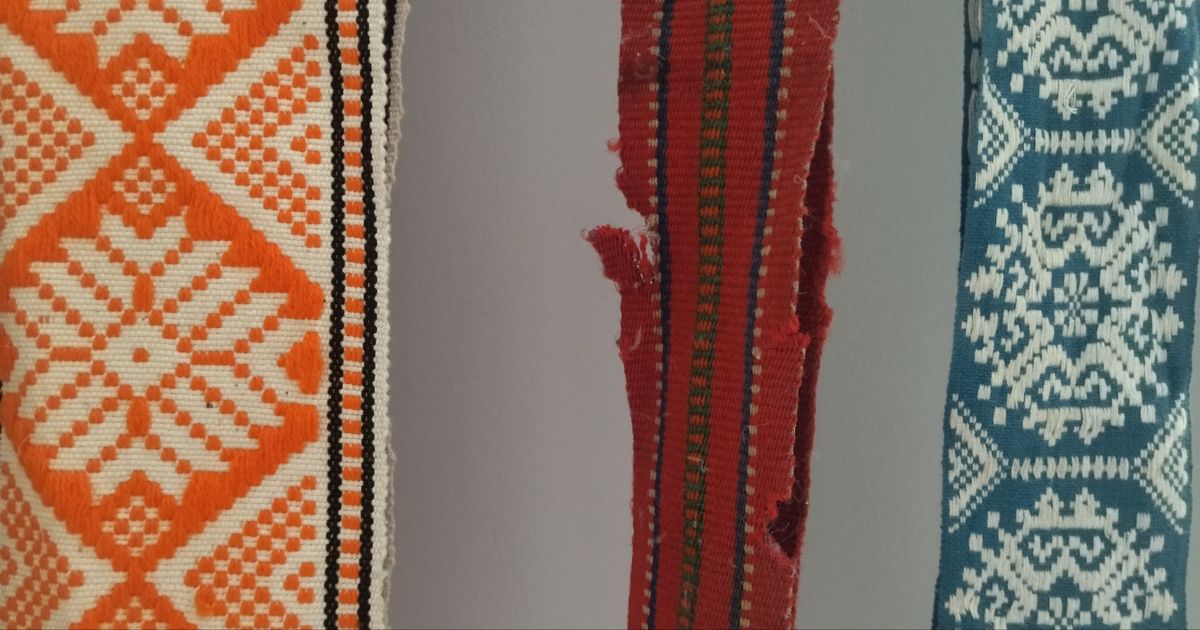
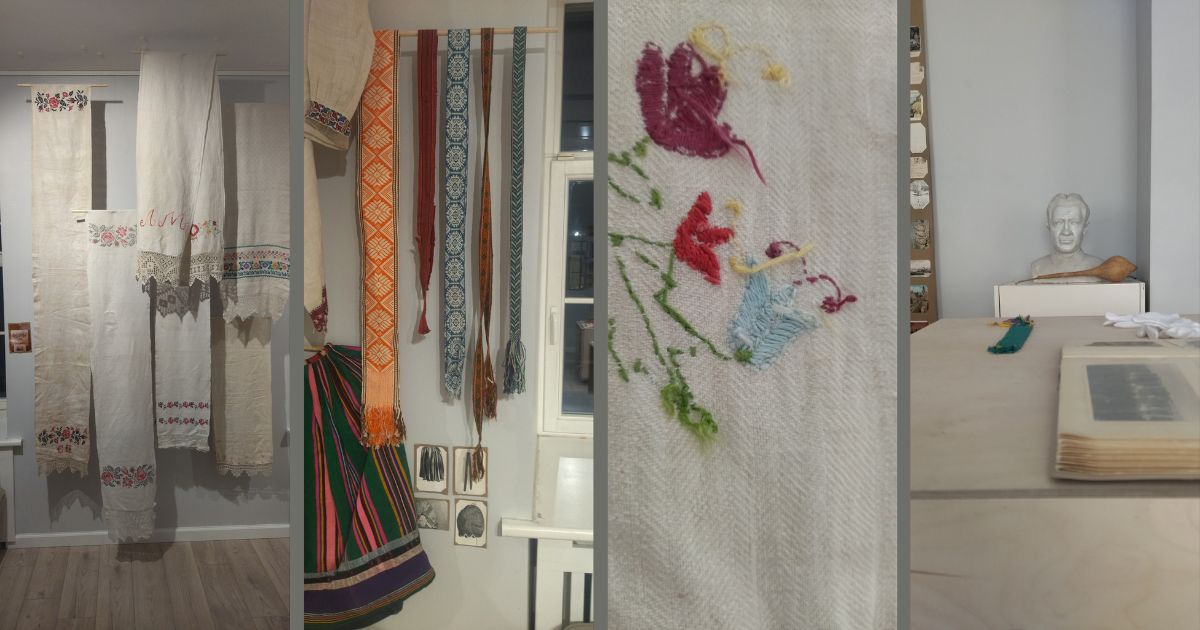
This exhibition presents a collection brought to Vilnius this past spring from Leimen, Germany. The collection is shown here in its entirety — the whole totality of it: textiles (towels, bedspreads, clothing); art and decorative pieces; the museum’s library; and Yury Popka’s personal correspondence and photo album.
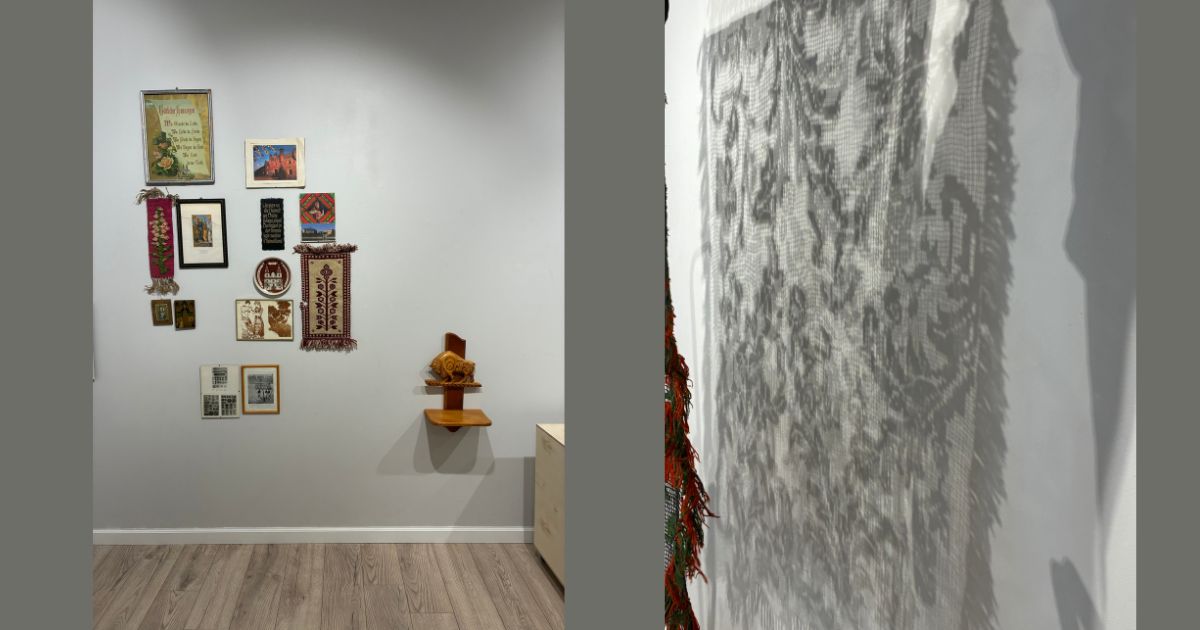
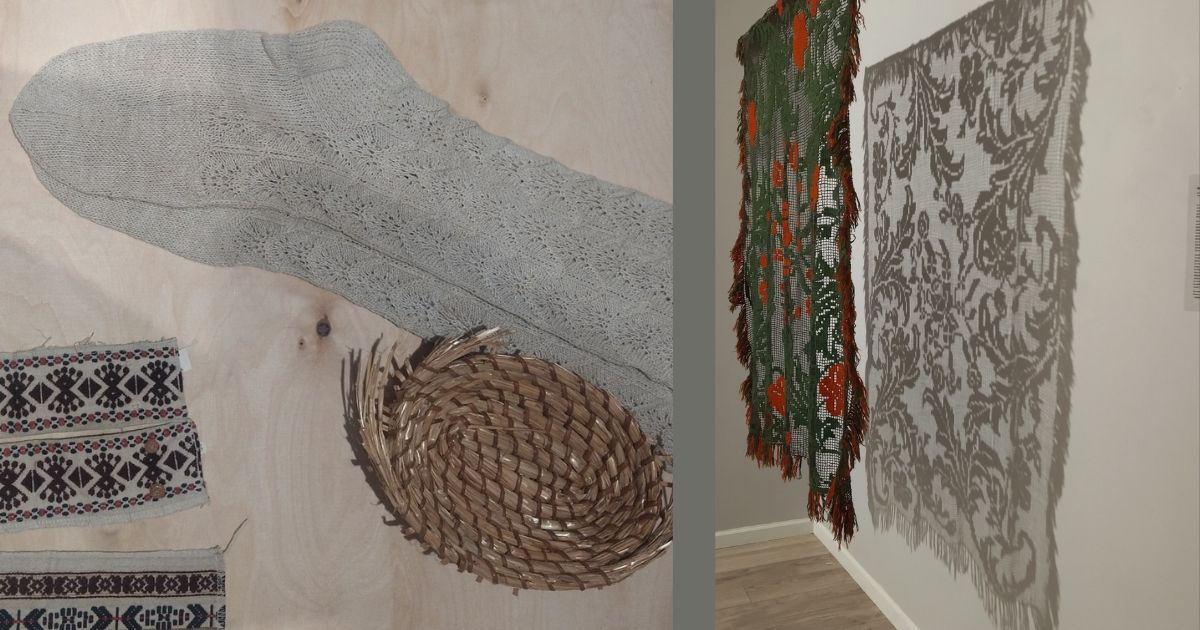
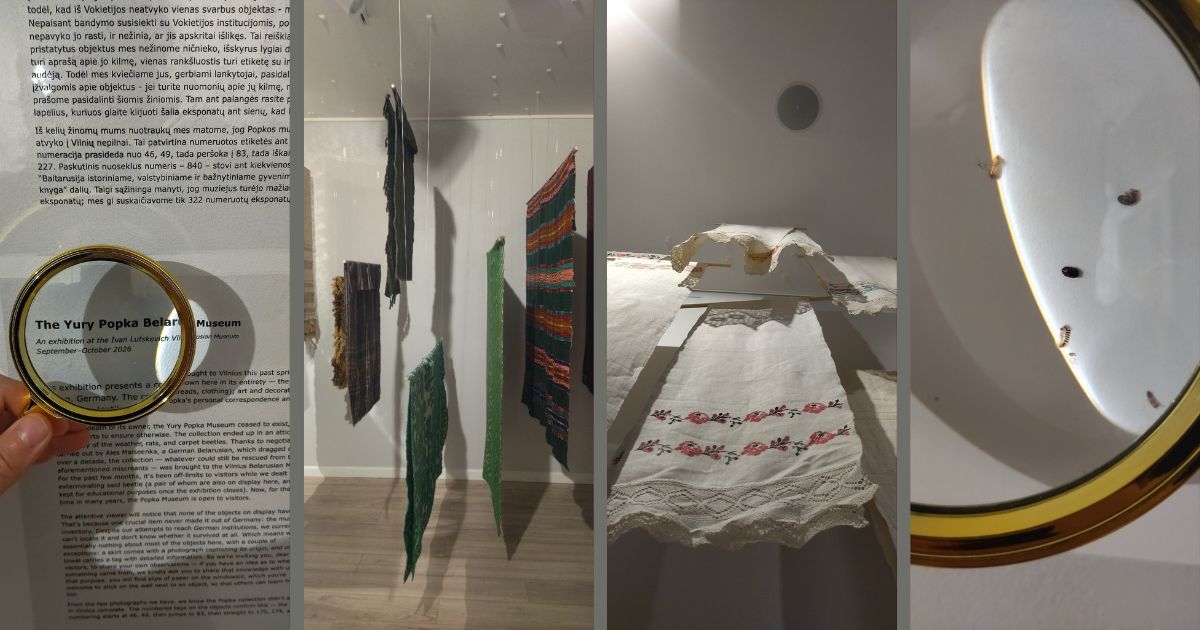
After the death of its owner, the Yury Popka Museum ceased to exist, despite all his efforts to ensure otherwise. The collection ended up in an attic, left at the mercy of the weather, rats, and carpet beetles. Thanks to negotiations carried out by Ales' Maiseenka, a German Belarusian, which dragged on for over a decade, the collection — whatever could still be rescued from the aforementioned miscreants — was brought to the Vilnius Belarusian Museum. For the past few months, it’s been off-limits to visitors while we dealt with exterminating said beetle (a pair of whom are also on display here, and will be kept for educational purposes once the exhibition closes). Now, for the first time in many years, the Popka Museum is open to visitors.
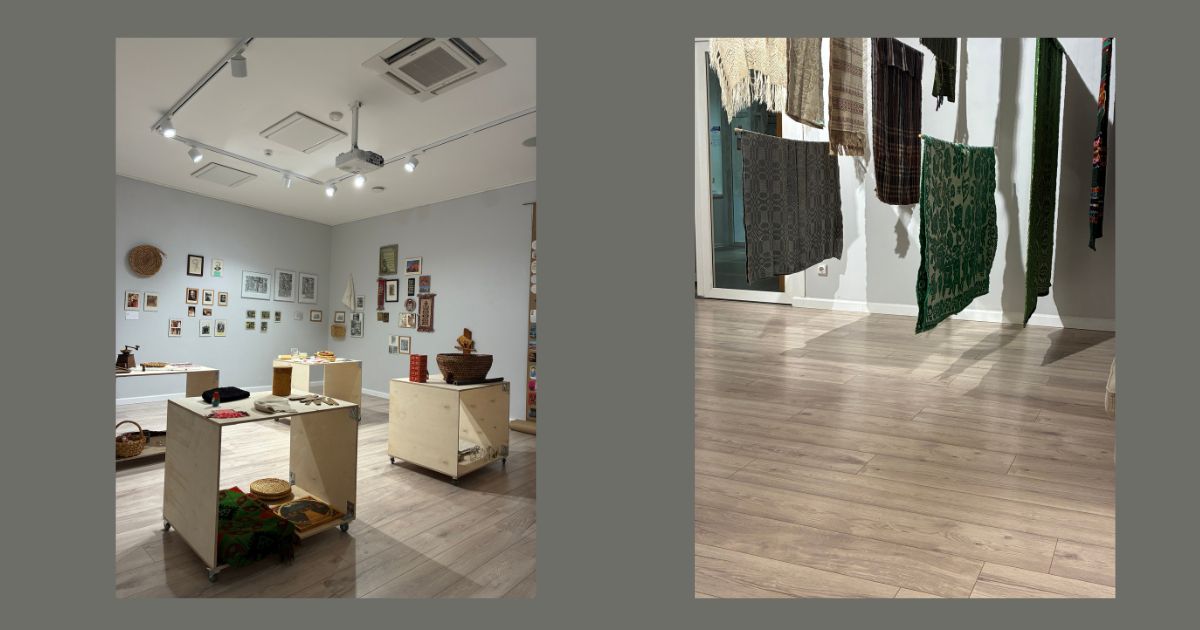
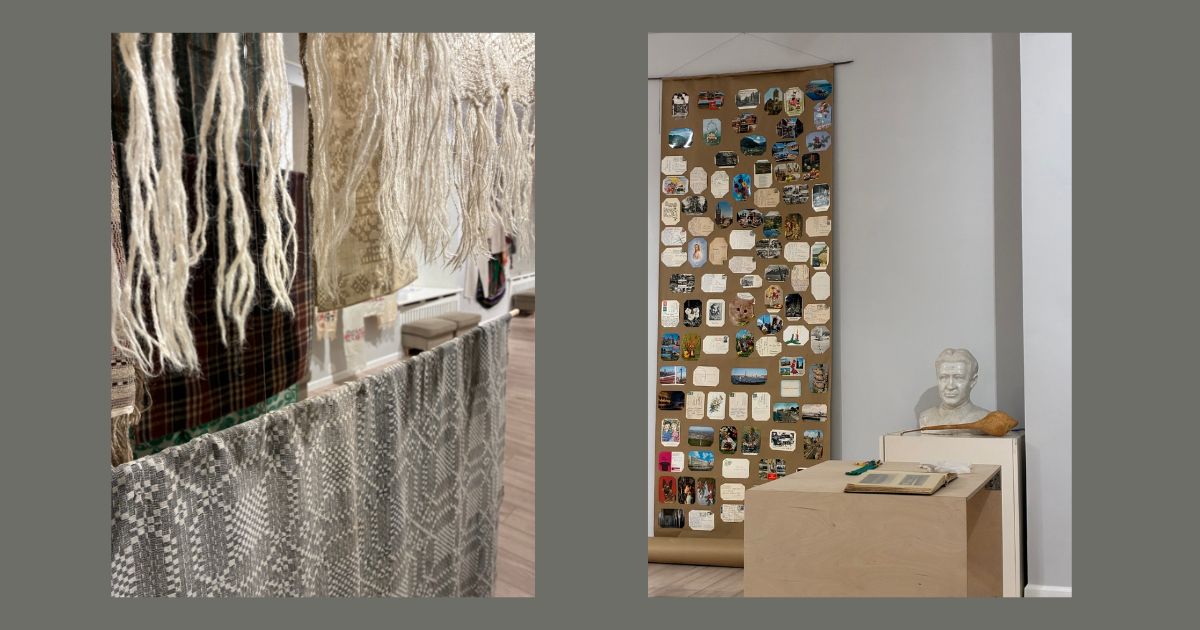
The attentive viewer will notice that none of the objects on display have labels. That is because one crucial item never made it out of Germany: the museum’s inventory. Despite our attempts to reach German institutions, we currently can’t locate it and don’t know whether it survived at all. Which means we know essentially nothing about most of the objects here, with a couple of exceptions: a skirt comes with a photograph captioning its origin, and one towel carries a tag with detailed information. So we’re inviting you, dear visitors, to share your own observations — if you have an idea as to where something came from, we kindly ask you to share that knowledge with us. For that purpose, you will find slips of paper on the windowsill, which you’re welcome to stick on the wall next to an object, so that others can learn from it too.
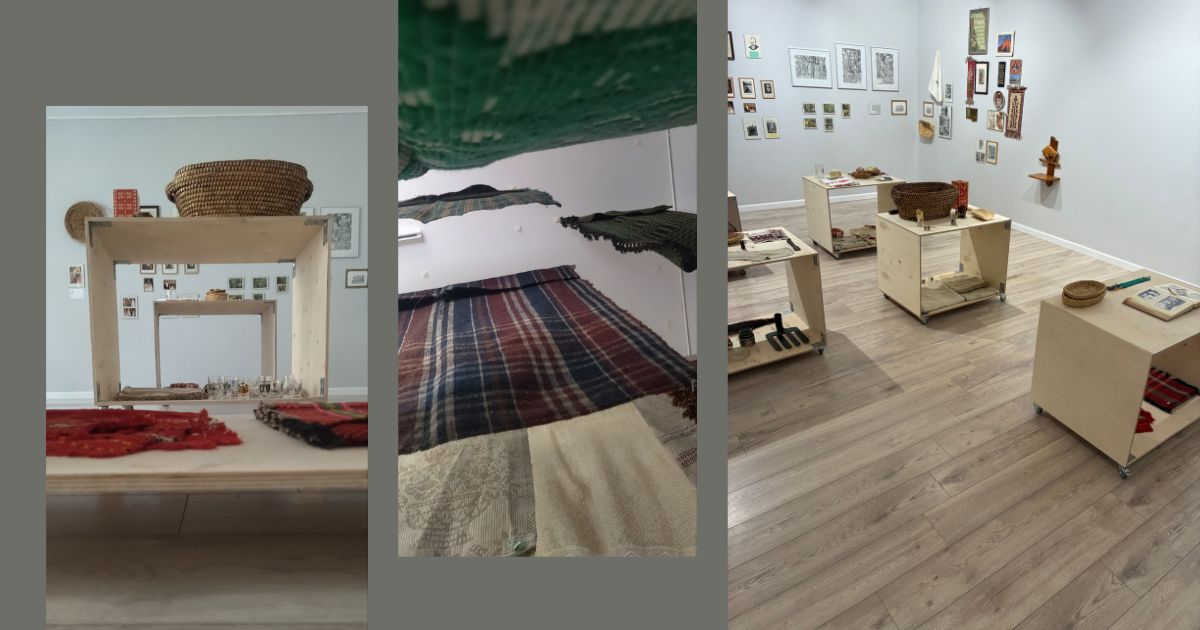
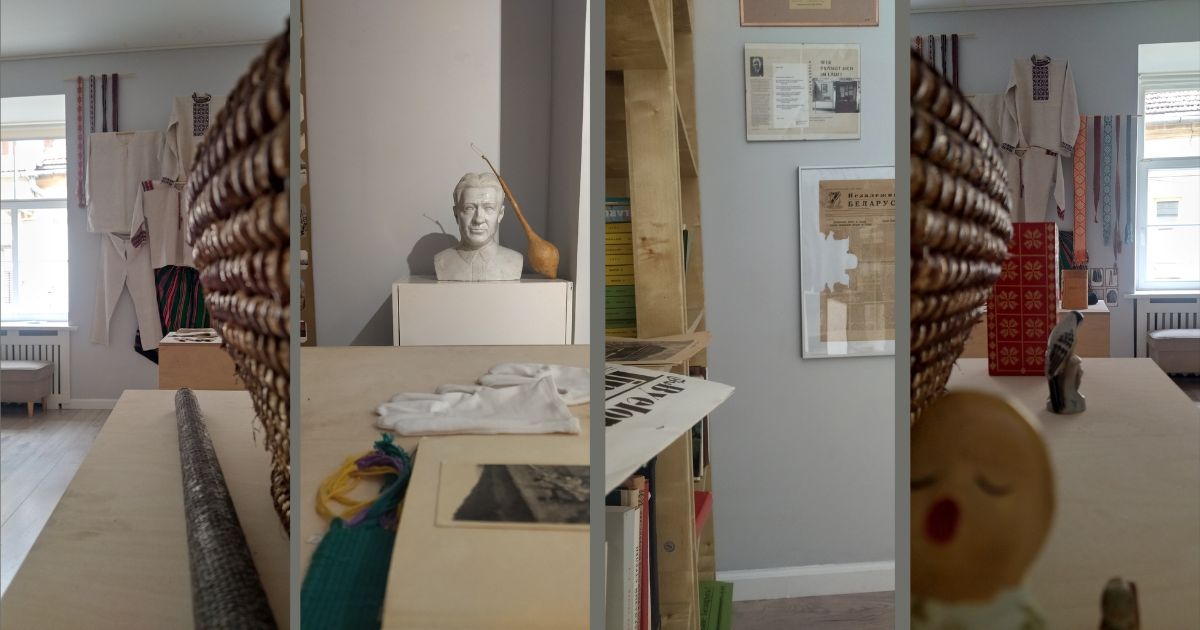
From the few photographs we have, we know the Popka collection didn’t arrive in Vilnius complete. The numbered tags on the objects confirm this — the numbering starts at 46, 49, then jumps to 83, then straight to 170, 174, and 227. The last consecutive number — 840 — appears on every part of the book “Belarus in Historical, State, and Church Life, in Three Parts.” So it is fair to assume the museum once held at least 840 objects; we, meanwhile, count only 322 numbered objects and books. There’s also a weaving shuttle with the label “1212-10,” which leaves us thoroughly confused.
This exhibition isn’t only about ethnography, the history of Belarusian emigration, micro-museums, and activism. It’s also about the harsh, unpredictable afterlife. The Popka Museum is that rare case where a will was actually drawn up, with substantial funds set aside to keep the institution running after its director’s death. And even that foresight didn’t save the collection from being more than half destroyed, for a number of reasons — chief among them, plain indifference to the will. A visit to this exhibition is as good a reason as any to go write your own will, and to spare a thought for whichever community will be stuck carrying it out.
Yury Popka dreamed that his museum would one day find its permanent home in Pruzhany, once Belarusian independence was restored. Right now, his museum is one step closer to that goal. ◦ Yury Popka (1912, Vysoki Hrud farmstead, Pruzhany county — 1990, Leimen, Germany) — writer, publisher. Chairman of the Pruzhany branch of the Belarusian Committee (1943–1944). Founder of the Institute of Belarusian Studies. In 1982, he opened his own Belarusian museum in Leimen.
Curator Paulina Vituščanka
Exhibition scenography Marija Garnak
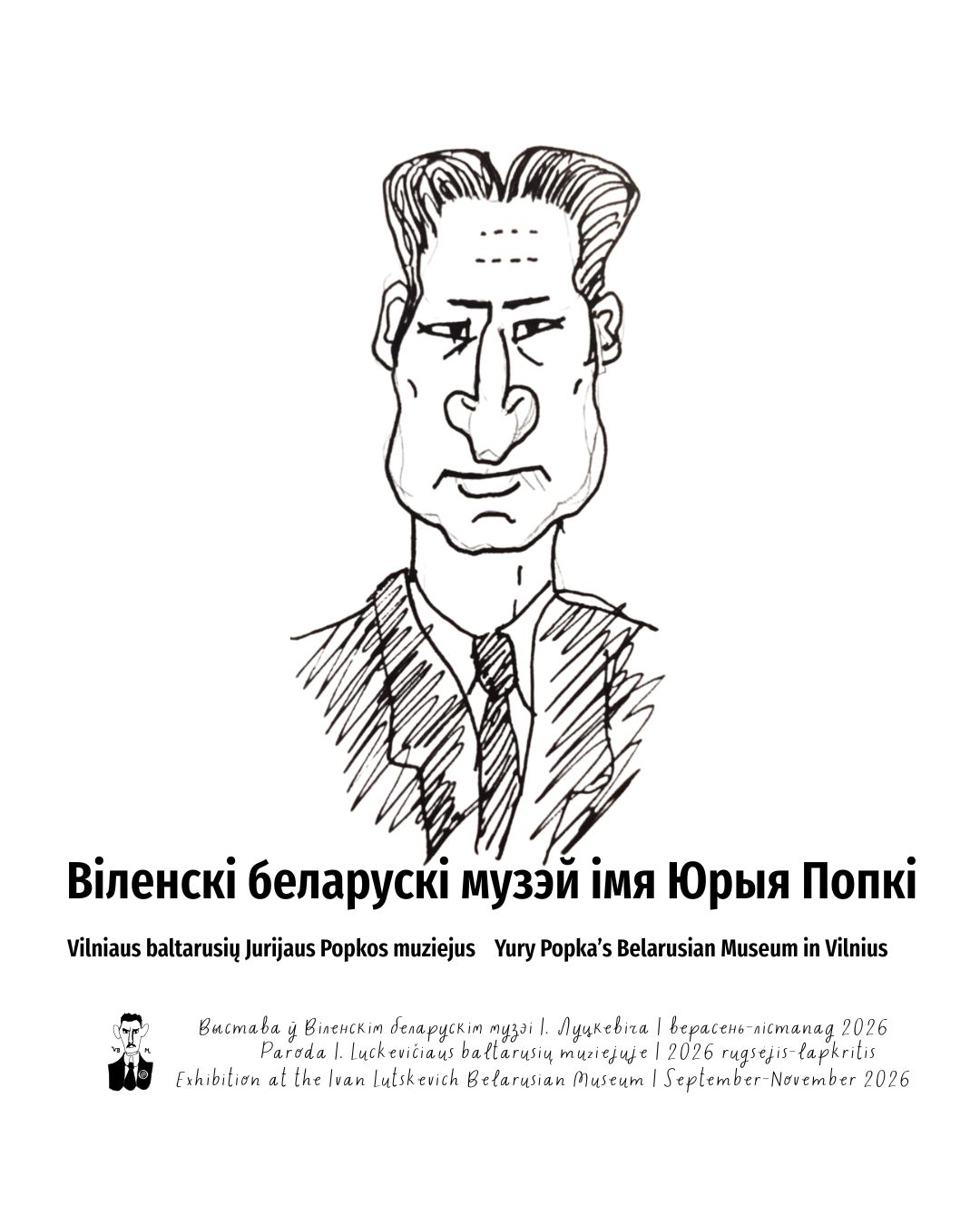
Poster illustration Ilia Magin
Volunteers Ales’, Telman, Volha, Inesa
Supported by Belarusische Gemeinschaft RAZAM e.V. Piotra Krečeŭski Foundation Department of National Minorities under the Government of Lithuania
Special thanks to Ales' Maiseenka
The collection will be stored on its new, handsome shelving unit after the exhibition, thanks to our generous donors.